

27.02.2014 - 12:58
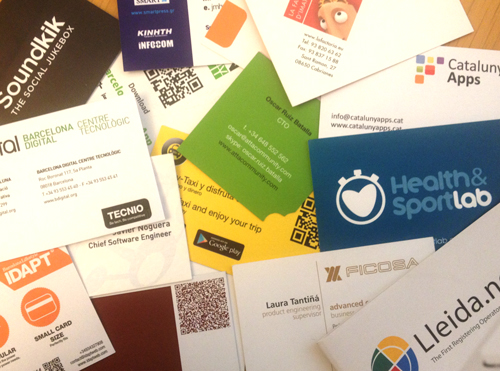
Barcelona’s Mobile World Congress is vast. The stands occupy eight separate halls, over 100,000 square meters (which is something like 1,000,000 square feet!). Yesterday, I spent the day in two small corners of the Congress—talking to the leaders of the Catalan companies who had come to show off their wares.
There is a certain fatigue that sets in by day three of any trade show, and yesterday was no exception. And yet, I was continually surprised at the breadth and depth of offerings from small and larger, new and older Catalan companies.
From antennas to automatic emergency calls
One of the older companies was Ficosa, begun in 1949 and which began by specializing in antenna communication systems. They have become leaders in creating non-obtrusive antenna systems, though at MWC14 they were showing off a special dash-installed transmitter-receiver that can automatically make emergency calls in the event of an accident, and that includes a special SOS button that drivers can use to get help. Like many of the products I saw, the receiver included a GPS receiver, that automatically tracked the vehicle, thereby facilitating rescue.
Measuring fitness
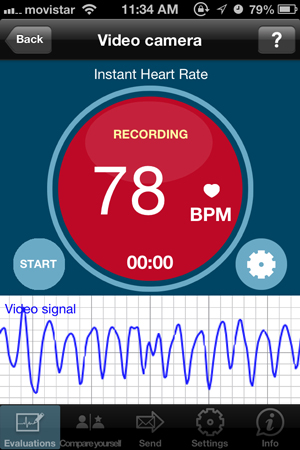
Health & Sport Lab is working on a number of projects related to health and fitness. Their FitLab, available for both iOS and Android, lets you assess your general outlook before and after exercise, and then compare your condition with previous points in time. One of its flashier features, so to speak, is that you can put the video camera up to your finger to take your pulse (or use a Polar Band). Jordi Moreno told me that the app is currently being used by the Barça Basketball team to monitor their athletes’ fitness regime.
Moreno also demo’d a new game that they’re working on that, using the same pulse monitor, teaches the user to control their heart rate through breathing and concentration by using the heart rate to determine the position of a player in the game. That is, when the person’s heart rate goes up, the player ascends and when the heart rate goes down, the player descends.
Making check-in faster
I next spoke with Cristina Cañero, the Research Manager at iCar. iCar has developed technology to read identification documents—including ID cards and passports from all over the world—and apply their own OCR technology in order to parse the information and make it available to the user. Cañero explained that hotels are one of iCar’s major clients, and have been able to use the program to reduce check-in time from five minutes to a matter of seconds. The receptionist can use a scanner or tablet to photograph the ID or passport, and the information—name, ID number, address, which are all required for check-in—are all automatically entered into the hotel’s database. The system is designed to recognize information from different countries’ documentation and knows how to interpret different format dates, multiple last names, and more.
Connecting the field with the office
AiscadMobile is an app designed to connect surveyors and technicians in the field with designers, architects, and specialists back in the office. For example, you can go to a work site, and view the work plans overset on geographic, electric, water installation, and other kinds of maps. The surveyor can compare if the work adheres to what is expected, and can make changes or add drawings that are then relayed back to the home office. Luis Aguilar, AiscadMobile’s CEO said the app works on desktop and mobile devices, but said that the glare from most tablets makes them less than optimal, and that more expensive, non-glare screens are best.
Encouraging collaboration in the classroom
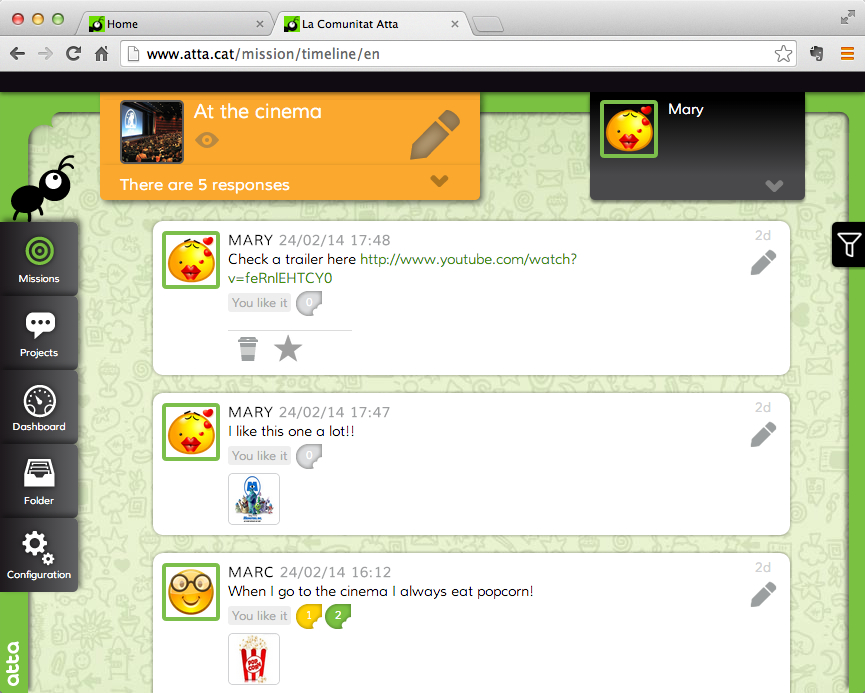
Atta is an innovator in collaborative education. They have developed a social networking app specifically designed to help students work together in the classroom. CTO Oscar Ruiz told me that by working with the GRAD from the University of Vic, that have found that students get a better understanding of the material if they work collaboratively. Kids can enter the system, upload videos, drawings, and other work, and then, most importantly, comment on the work of their peers. The teacher can reward interesting work and interesting comments. The software is available for desktop and mobile, and in Catalan, Spanish, and English, and soon in Basque. You can download and sample the system.
La Factoria is also working to use mobile technology to inspire students. Bernat Casanovas, the Design Manager said they have created software that helps publishers and educators create interactive tablet-based learning materials. And they’ve also created an app called Make It—available on Apple’s App Store—that kids can use in the classroom to create their own books.
Certifying electronic communication
Finally, I spoke with the folks at Lleida.Net, which began as a telephone operator specialized in SMS services and now has clients in 40 countries and offices all over the world. Their specialty is certification of electronic communication. If you need to prove that you have sent a given SMS—perhaps for a court hearing or other legal proceeding—you can send it through Lleida.Net and they will certify both its transmission and its reception. They also now offer the same service for certifying emails.
Lleida.Net has teamed up with iCar (described above) to create StampID, which lets users photograph an ID card, and then email a certified copy—with its contents properly OCRed and parsed—in order to be used to sign a contract—thereby reducing fraud by 82%, according to Elena Sorribas, Lleida.Net’s Media Relations Manager. They also offer Stamphoto which certifies photos of car accident damage with geolocalization and timestamps that can then be entered as legal evidence.
All of the Catalan apps that I saw had English-language editions.