

04.03.2014 - 16:17
Interview with Member of European Parliament and candidate for CiU to the European elections in May · He speaks Sedó stepping down, the common plank, tracking Members’ activity, and the opinion of the European institutions on Catalonia’s independence
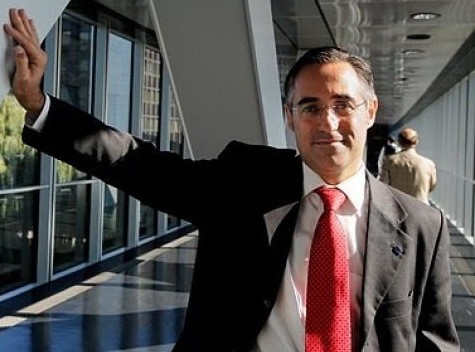
Economist Ramon Tremosa will step up again as candidate for CiU to the European Elections on May 25. He has spent five frenetic years working in committees, writing reports, negotiating with commissioners, and serving as spokesperson for the sovereignty process in Brussels. Tremosa has been one of the most active Members of the European Parliament (MEPs) this legislature and is satisfied with the assessment that can be made. Yesterday, CiU’s executive committee approved his candidacy for the elections that they will enter together with Unió (Catalan Demo-Christians), PNB (Basque Nationalist Party), Coalició Canària (Canary Islands Coalition), and Compromís per Galícia (Commitment to Galicia). Tremosa’s confirmation as candidate comes one week after Unió MEP Salvador Sedó’s withdrawal from the race. In this interview, we asked him about his role in this withdrawal, the reasons why he agreed to continue on in the EU Parliament, his opinion about the ‘single list’ proposal and the common plank, and also the state of the opinion of the European institutions with respect to Catalonia’s independence.
Would you have been a candidate if Unió had stuck with Sedó?
I am a candidate because there is an ongoing process for the right to decide in Catalonia. If that weren’t the case, my time in the European Parliament would have been over and I would have returned to university life. The reports that I’ve made are done. I’ve had the experience. But to the extent that in Brussels there is a lot of demand for holding conferences about Catalonia, I try to attend to these requests. In addition, the government needs people with experience in the heart of Europe. With Andreu Mas-Colell [Catalonia’s Minister of Finance] I have worked hard in the area of economics, as well as with the Catalan Government’s Ministers of Transportation. For a whole set of reasons, I am running again. And it’s not an issue of names on a list.
From the outside, it looks different.
My preference was very clear about having a single list. And even after Oriol Junqueras (ERC) said no last month, negotiations continued until very recently. I would have been thrilled to be part of a joint list. Seeing as that is not possible, the parties’ executive boards have made decisions about the names and positions on the candidacy lists. Parties are sovereign and you should pose this question to the heads of the parties, of Convergencia and of Unió, in this case.
But would you have agreed to be part of a list with Sedó? Regardless of a party’s decisions, it’s the candidate who accepts the proposal…
They did not propose it to me in those terms. In the conversations I had with the president, we focused on November 9th, about the right to decide and about the possibilities that may open up from this point forward. The current context is completely different from five years ago, when the previous European elections were held. And that describes the level and the subjects of our conversations. At no time did we discuss the names of the candidates that might come on the list and we don’t know if the number 3 will win a seat. What is key to me is the trust that President Mas has earned from me now, which is not the same as five years ago. Now the situation is very different. The country is headed straight toward the referendum and it’s in our interest to have experienced leaders in Brussels.
At any rate, don’t you feel responsible for Sedo’s backing out? Duran bandied about your name.
No. I haven’t had any relationship with Mr. Duran during these past five years. I can’t offer an opinion on that.
Were you looking forward to coming home after five years?
It’s been five very intense, very lovely years. The experience has been great. The Nordic countries send young people who are just beginning their political careers in the European Parliament. Some of those are now Ministers or Commissioners. The experience of coming into contact with those people is really great. But there are advantages and disadvantages. I have a wife and three children… an academic career on hold. In normal circumstances, my European tour would have been at an end. I like politics and parlamentarianism quite a bit but I don’t have any plans to spend the next forty years in parliament. It’s Catalonia’s national process that motivates me to stay on. That’s why I’ve accepted another mandate: so that I can help as much as possible in this moment in which the Catalan cause arrives in Europe and Europe has a role to play. The more favorable Members we have, the better, and the more experienced Members, better still.
Did the president personally ask you to run again?
Yes. We have had many conversations over the past year. As the events have unfolded, not only the president but the entire leadership of Convergència have asked me to continue. But, above all, it’s the people on the street, unrelated to the parties, who have asked me to stay on, seeing the historic importance of the current moment.
Five years later, you’re still an independent.
I have always felt very comfortable that way. No one in Convergència has asked me to sign up. No one has told me how to do my job. They’ve only asked me a few times what I was going to vote in the European Parliament. When they have, it’s always been so that there was consistency between positions taken in the Catalan, Spanish, and European parliaments. I have had absolute freedom to contract my own assistants. I have asked the questions that I felt were opportune in the European Commission without anyone ever keeping me from doing anything. I have been able to organize whatever activities I wanted in the parliament. I am very happy that no one has ever asked me to be a card-carrying member. I am independent and I feel more comfortable that way.
Are you disappointed that there isn’t a ‘single list’ [of pro-referendum candidates]?
Yes, I am disappointed. It may be that the pro-sovereignty parties place first in these elections. It’s not unlikely that CiU and ERC come in first and second—we’ll see in which order—in front of PP and PSOE. That would be big news. But we have lost the chance to make a really big impact. A single list would have mobilized a lot of people in a European context of electoral fragmentation and apathy. At a moment when groups are fragmenting, that the Catalans could defend a single list to defend our referendum in Europe would have had a very big electoral answer. It’s a shame how everything has gone. I defended a single candidacy list last July, before the Catalan Way, and I have not stopped since. I am happy that Convergència has made its proposal and defended it to the end.
The debate is now around the platform’s ‘common plank’. ICV doesn’t want it. What do you think?
I don’t understand why we’re still talking about it. This matter was a logical conclusion from the December 12 agreement on the referendum’s date and question. I understand that ICV doesn’t want to form a joint list or that it doesn’t want to hold joint events, but that it doesn’t want to add a common plank to its platform goes against the spirit of a lot of the people that I know in that party.
You know Romeva particularly well…
He isn’t in this vein. It seems like now you can’t even have a single sentence in common with Convergència in your electoral program. It’s a shame, because this attitude takes us back to the past, with the sectarian idiosyncrasies between the good guys and the bad guys. I find it very strange. And it weakens us because the Spanish block is most certainly a granite block against Catalonia’s right to decide. It weakens us gratuitously. If Iniciativa thinks this is OK for its electorate, I think they’re making a mistake. But there’s nothing we can do about it. Feel sorry about it, and that’s it. I don’t know and I can’t say what Romeva would have done. I haven’t spoken with him about it. But our collaboration on topics of national interest has been very important and very positive over the past few years. It was logical to think that these active units would have joined together stronger now, in the current context, in some way. What can you do? The Catalan people should take note and on May 25, vote consequently.
You will stand with PNB, Coalició Canària, and Compromís per Galícia. Is this really the moment to lead a state-wide coalition?
I have to say that we have cooperated really well with the Basque National Party (PNB) these past years. The MEP Izaskun Bilbao is the former president of the Basque Parliament and has been in office next door these past five years. She has helped us Catalans a lot. For example, as a representative of the Liberal Group in the negotiations on the Mediterranean Rail Corridor, we always had first hand information about whatever was being worked on. With the PNB it may be that we get a third representative that otherwise, without them, we might not have.
But was it the moment to make alliances outside of Catalonia?
CDC’s choice was very clear: our priority was to present a unitary, pro-sovereign candidacy, and in that case, the alliances in the Spanish State would not have been necessary. Once that possibility was ruled out, thinking in terms of the day-to-day operations in the EU Parliament, I have to say that the collaboration with the PNB has been very positive, and very loyal. It’s important to be as many as we can be because there is a lot of work and on our own we can’t attend all the parliamentary committee meetings.
You are one of the most active Members of the European Parliament during this legislature. There are other Catalan MEPs at the other extreme. Why are there such big differences?
It’s a cultural issue. There is the case of a British MEP: when he doesn’t attend sessions in Strasbourg, the other British MEPs photograph his empty seat and they post it on Twitter. Many Scandinavian MEPs file a daily report of their activity to justify the per diems that they earn. It’s a problem of pressure and democratic culture. My pressure comes from fishermen, shepherds, and industry leaders who are interested in the regulations that affect them. Historically, Convergència’s MEPs have had a lot of work to do in Europe.
There is a problem with the political culture, but there is also the personal responsibility of each of the MEPs.
I wanted to join the important committees, like Financing, and I tried to take on the most decisive reports even if that meant a lot of extra work. It’s a way of being involved in the highest level negotiations that affect citizens the most. I have tried to make the most of the experience that the people offered me five years ago. If there are MEPs that have not done so, you’ll have to ask them why not. There is a lack of democratic culture in the demands put on our elected representatives.
Does the media pay enough attention to what you’re doing?
The newspapers descend into sensationalism way too often, instead of tracking the MEPs’ work, which is not so much the case with digital media. The efforts carried out in this sense by Scandinavian media is a great example. They keep careful track of the work done by their MEPs in the European Parliament. In addition, these MEPs have space in the media to explain what they do, what negotiations they’re involved in, and so on. Here it’s totally the reverse: a vote about the MEPs first class airplane flights gets three times more coverage than the entire electoral campaign.
That debate suffered from a populist bent.
In Europe, they say that populism in the media precedes populism in politics. If the media is populist, we shouldn’t be surprised that the people vote for the populists. If the media dedicates space to a vote on esthetics that doesn’t affect the budget instead of the important votes, something’s not right.
The European Liberals is the party that has most explicitly defended Catalonia’s right to self-determination. Are you proud?
I am very happy. Because we have explicit positions in favor of Catalonia’s right to decide its future. Now they’re saying that UPyD and Ciutadans want to join the Liberal Group if they win a seat… These people reject the right to decide. And Graham Watson, president of the European Liberals is in favor. That makes our job a lot easier. The Liberal Group has not washed its hands of the Catalan case, but instead is totally committed to our process. This is another thing that makes me want to continue. I have a personal tie with many MEPs that are asking for more first-hand information. In the times in which we live, that’s also important. I value very highly that they have remained loyal to freedom and to democracy, which are the principals of liberalism.
Have you noticed any significant changes in the knowledge that MEPs and European institutions have about Catalonia’s process towards independence? Are they more favorable?
Catalonia has come into fashion over the last year and a half. You just have to look at the amount of space that the international press dedicates to us. Reading foreign papers is great. Last week the former British Consul was countering the PP’s MEP Cayetana. Every day is a party. We Catalans don’t even have to do the work, the media is doing it for us.
Has the hostility from several years ago gone away?
More than hostility, it was ignorance. It was indifference. Now there is interest and a lot of information. The most prestigious and influential media outlets dedicated entire pages to well written information. There was that article that ‘The Economist’ published a few weeks ago, ‘Homage to Caledonia’, which appeared a week after the journalist who wrote it had come to one of my conferences on the Catalan question in Brussels. The French Institute for International Relations had organized a seminar on Scotland and Catalonia. The Scottish MEP was the SNP’s Alyn Smith and the Catalan was me, from CDC and the ALDE group. At the end, the journalist asked me to join him at breakfast the next day to explain more about the situation. To see that a week later there is a perfectly good article about us is very gratifying, because it’s the most influential column in Europe. Five years ago, it wasn’t like that.
Five years ago, things were very different.
We had the three-party coalition in Catalonia and Zapatero in Spain. Both sides had given their OK to a new financing agreement and had buried the Catalan issue. When I accepted the candidacy for CiU in Europe, that was the situation. Everything seemed closed and shuttered. The Catalan dossier was totally buried. If you look at these last five years with a little perspective, it’s very exciting. We have the problem of reading too much press from Madrid and not enough from outside. The outlook is very exciting. In Europe, the ones who are nervous are the Spanish.