

26.01.2014 - 18:44
Valls is 60 miles south of Barcelona, just inland from the old Roman city of Tarragona. Much of the hour-long drive is punctuated with views of almond, hazelnut, and olive trees, and rows and rows of vineyards. Every once in a while there’s a little stone hut in the middle of a field of grapes, a little broken down, not quite sure what it’s still there for. The land looks hard and scrabbly, but carefully tended.
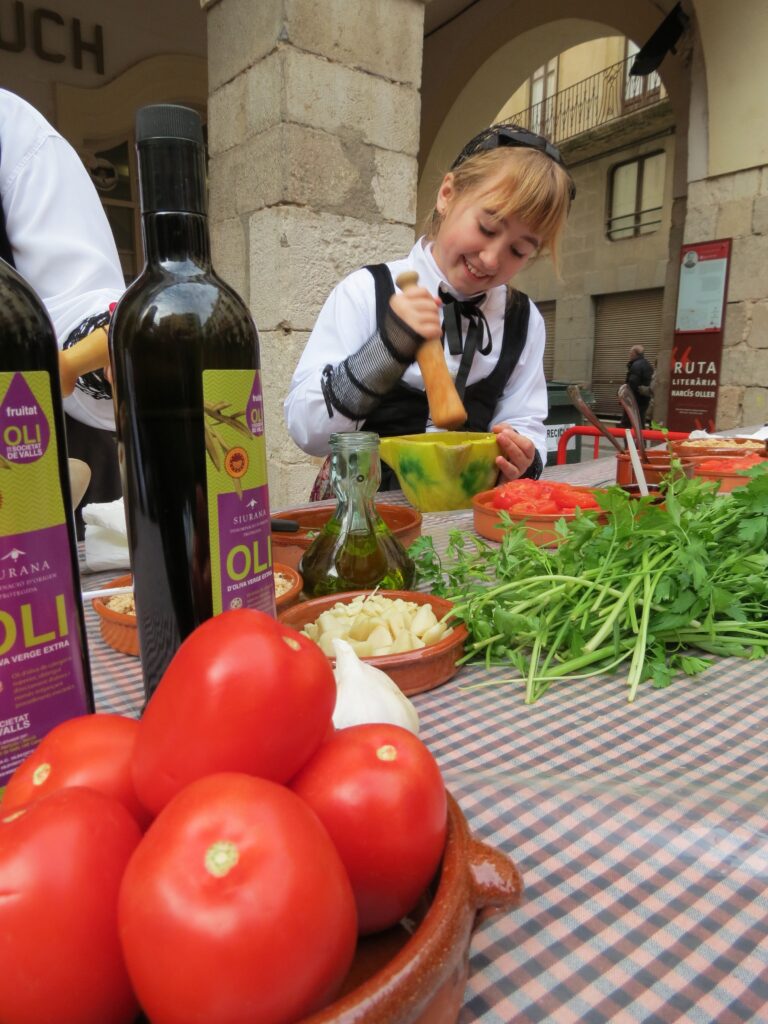
They say that a Valls farmer named Xat de Benages was the first to discover that if he packed up dirt around sprouted onions left behind from the harvest, the sprouts would grow until they were as big as leeks, but much more tender. He then grilled them on an open fire and developed a hearty almond, tomato, garlic and pepper sauce to eat them with. Packing up dirt around a plant is called ‘calçar’ in Catalan and so the tender, long onions are called ‘calçots’.
100 years later, calçots from Valls have been designated a EU Protected Geographical Indication and more than 400,000 people travel each year to the area to eat calçots.
Each year on the last Sunday in January, Valls holds its “Calçotada Popular” or calçot festival. There are contests for best bunch of calçots, best calçot sauce, and there is also a calçot eating contest, which this year was won by Barcelonian Adrià Wegrzyn for the eighth time. While regular diners might eat 20-25 calçots during a meal, Wegrzn won the contest this year by eating 275 calçots, a total of 3.8 kg (more than 8 pounds).
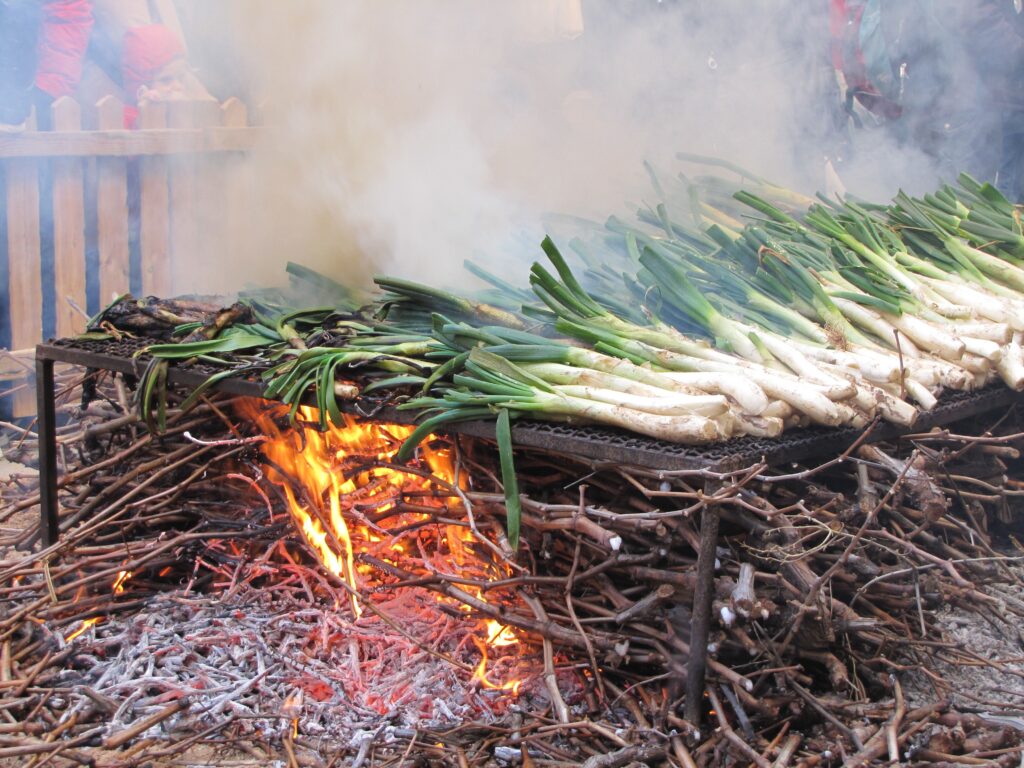
One of the most popular parts of the festival is the demonstration of how to grill calçots in the Plaça de l’Oli (Oil Square). First, sand is spread in the square to protect the pavement. Prunings from the local vineyards—the only acceptable fuel for grilling calçots—are piled high next to the fire pits. Four or five traditionally dressed men prepare the calçots by cutting off the root ends. They then spread the calçots on wire trays and gently lift them over the fire. The flames char the outside of the calçot and leave the inside tantalizingly tender. The men carry wire hooks for lifting up the grills, a rake, for keeping the coals and ashes together, and a communal glass ‘porró’ from which they occasionally pour a stream of wine into their parched throats—without ever touching their lips. Their fingers are black with soot.
Once the calçots are ready, they are wrapped in newspaper to stay warm. Packages of 12 of these calçots, a small container of homemade calçot sauce, two pieces of bread, a napkin, a bib (de rigeur for calçot eating), a small bottle of Valls wine, and a large orange for dessert, sell for 8 euros. Valls sells some 5000 calçot packs each year during the festival.
Surrounding the Plaça de l’Oli are numerous butcher shops, all surprisingly open and full of customers on a Sunday morning. Next to the calçot grilling is a second fire where the public can grill their own meat for the second course of the meal.
In recent years, the Valls Calçotada has attracted a lot of international attention, particularly from Asian tourists.
More than 40,000 people were expected in Valls this weekend.